
Cyber Essentials versus Cyber Essentials Plus
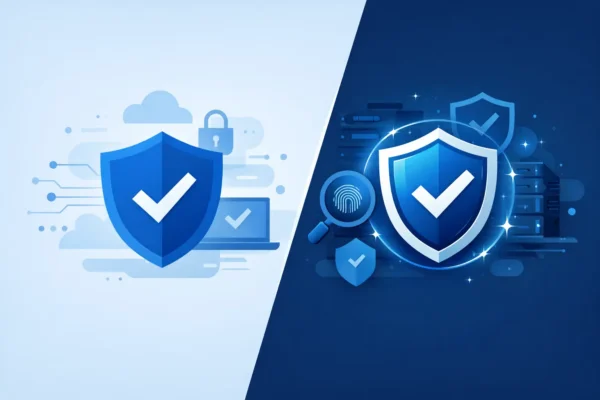
If a customer, insurer or public sector buyer has asked for certification, the question usually lands fast: Cyber Essentials versus Cyber Essentials Plus – which one do you actually need, and what will it involve for your business?
For many SMEs, the answer is not just about passing an assessment. It is about balancing risk, budget, staff time and commercial credibility. Both certifications are based on the same five core technical controls, but the level of assurance is very different. One is a self-assessment with external review. The other includes hands-on technical verification. That difference matters.
Cyber Essentials versus Cyber Essentials Plus: the core difference
At a high level, Cyber Essentials is the foundation standard. You complete a structured questionnaire covering areas such as firewalls, secure configuration, access control, malware protection and patch management. Your answers are then reviewed by a certification body.
Cyber Essentials Plus builds on that same baseline, but it does not stop at paperwork. It includes an independent technical audit to check whether the controls you say are in place are actually working in practice. That can include vulnerability testing, device sampling and user-level checks across your environment.
So when businesses compare Cyber Essentials versus Cyber Essentials Plus, the real distinction is trust. Cyber Essentials shows that you have declared the right controls. Cyber Essentials Plus provides stronger evidence that those controls are active, effective and consistently applied.
What Cyber Essentials involves in practice
Cyber Essentials is often the right place to start if your business has never been through a recognised cyber security certification before. The process is more accessible, less disruptive and usually quicker to achieve.
You will need to review your estate properly before answering the assessment. That means understanding what devices you have, what software is in use, how patches are applied, who has admin rights and how your staff access company systems. If your setup is tidy and well managed, that exercise can be straightforward. If your environment has grown quickly, includes remote workers or relies on a mix of old and new systems, gaps often appear.
The benefit of the standard version is that it gives smaller organisations a practical route into better cyber hygiene without the cost and pressure of a full technical audit. It is credible, widely recognised and in some sectors it is enough to meet supplier or tender requirements.
That said, it does rely on accuracy. If internal knowledge is patchy or responsibilities are split between different suppliers, self-assessment can become harder than expected. Businesses often assume they are closer to compliance than they really are.
What Cyber Essentials Plus adds
Cyber Essentials Plus is designed for organisations that need more than a baseline declaration. The assessment goes further by testing your controls in the live environment. That gives customers, partners and stakeholders more confidence because the result is based on verification, not just stated policy.
The technical audit will normally involve an assessor examining a sample of devices and systems to confirm that security settings, update management, protection tools and access controls are operating as required. The scope and preparation needed can vary depending on your size, infrastructure and working model.
For some businesses, that sounds like a big step up, and it is. But it is also where the real value sits if you want independent proof. If you handle sensitive client information, work in regulated sectors, support public sector contracts or want to demonstrate mature cyber security controls to insurers, Cyber Essentials Plus can carry more weight.
It also tends to sharpen internal discipline. Businesses preparing for Plus often uncover practical issues such as unsupported devices, inconsistent laptop builds, dormant user accounts or patching delays that would otherwise remain hidden until they caused a security problem.
Which certification is right for your business?
There is no universal answer, because the right choice depends on your commercial goals and your current level of technical control.
If you are a smaller business taking the first step into formal cyber certification, standard Cyber Essentials is often the sensible starting point. It helps you establish the basics, strengthen day-to-day security and meet many common client expectations without creating unnecessary pressure.
If you are bidding for larger contracts, working with more security-conscious customers or already have a reasonably mature IT setup, Cyber Essentials Plus may be the better fit. It shows a higher level of commitment and can help remove doubt during procurement conversations.
Some organisations also take a staged approach. They achieve Cyber Essentials first, use that process to tidy up any weak spots, and then move on to Cyber Essentials Plus once their systems and internal processes are ready. For many SMEs, that is the most commercially practical route.
Cost, time and internal effort
Cost is often one of the first decision points in any Cyber Essentials versus Cyber Essentials Plus discussion. Cyber Essentials is cheaper and generally lighter to deliver. Cyber Essentials Plus costs more because it includes technical testing and more assessor involvement.
But the certificate fee is only part of the picture. The bigger variable is internal readiness. A business with well-managed devices, centralised patching, controlled admin access and a clear asset list can move through either process far more efficiently than one with ad hoc IT arrangements.
Time is another factor. Standard Cyber Essentials can often be completed relatively quickly if the groundwork is already in place. Plus takes more planning. You need to prepare devices, confirm scope, fix any issues in advance and make sure the environment will stand up to external scrutiny on the assessment day.
That does not mean Plus is only for larger organisations. Plenty of SMEs can achieve it successfully. The difference is that it rewards businesses that treat cyber security as an operational discipline, not a once-a-year form.
Common reasons businesses choose the wrong one
A frequent mistake is assuming Cyber Essentials Plus is always necessary because it sounds more complete. In reality, some businesses pay for a higher level of certification before they are operationally ready or commercially required to do so.
The opposite mistake is treating standard Cyber Essentials as a box-ticking exercise when the business really needs stronger assurance. If you are storing sensitive data, relying heavily on remote access, or using certification as part of a trust signal in competitive bids, the standard version may not carry enough weight on its own.
Another issue is underestimating the preparation. Both certifications are easier when your IT estate is properly documented and consistently managed. They become harder when there are unknown devices, fragmented suppliers, ageing systems or unclear ownership of security tasks.
This is why external guidance often pays for itself. A good IT partner will not just hand you a questionnaire. They will help you understand scope, spot likely failures early and make sure the certification route matches your business objectives rather than just the cheapest or fastest option.
Beyond certification: what buyers and insurers are really looking for
Certification is useful because it gives buyers a clear benchmark, but most customers are not buying a badge. They are looking for reassurance that your business takes cyber risk seriously and can be trusted with data, systems and continuity.
That is where the distinction between Cyber Essentials versus Cyber Essentials Plus becomes commercially relevant. If a prospect wants simple baseline compliance, Cyber Essentials may be enough. If they want proof that your controls have been independently tested, Plus is more persuasive.
Insurers may also view the two differently, especially where cyber risk questions go beyond policy wording and into practical control evidence. A stronger certification position can support wider risk conversations, although it should never be seen as a substitute for broader security management.
For businesses in growth mode, there is another point to consider. Certification is easier to maintain when your systems are standardised, your user access is well governed and your support model is consistent. That is one reason many organisations tie accreditation work into a wider IT strategy rather than handling it as a standalone exercise.
A practical way to decide
If you are unsure which route to take, start with three questions. What are your customers or contracts asking for? How mature is your current IT and security setup? And do you want a basic compliance standard or externally tested assurance?
If the answer is baseline compliance and you are still tightening core controls, begin with Cyber Essentials. If the answer is stronger evidence, higher trust and readiness for external scrutiny, aim for Cyber Essentials Plus.
For many organisations, the most sensible path is not choosing the most impressive option on paper. It is choosing the one you can support properly, maintain confidently and use to strengthen the way your business operates. That is where certification starts to deliver real value rather than just another document for the file.
A good accreditation process should leave you in a better position than you started – clearer on your risks, more confident in your controls and better prepared for the conversations that matter.